Every Friday morning, the CFO opens the same forecast file before the executive meeting. Pipeline exports arrive from Sales. Finance adds bookings, revenue timing, churn assumptions, and late-stage adjustments. Someone checks the last board deck. Someone else asks whether the commit number changed overnight. By the time the forecast is ready, the business has already moved.
That weekly ritual is not a planning process. It is a manual roll-up cycle that consumes finance capacity while still leaving executives to defend numbers assembled from stale spreadsheets. Financial Agents from Next Quarter offer a different operating model: agentic forecast roll-ups built from live pipeline and finance data, continuously reconciled into one source of truth.
The Real Cost of Manual Forecast Roll-Ups
Manual forecasting often looks disciplined from the outside. There is a calendar, an owner, a spreadsheet, a set of inputs, and a meeting cadence. But inside the process, the CFO is managing friction everywhere.
Pipeline coverage lives in the CRM. Bookings and revenue logic live in finance systems. Adjustments live in spreadsheets. Forecast commentary lives in slides, emails, and meeting notes. Each Friday, finance teams rebuild the same view by pulling data from disconnected systems, checking definitions, and reconciling numbers that should have aligned before the meeting began.
The cost is not only time. It is confidence. When the forecast depends on manual exports, version control, and spreadsheet formulas, leaders spend the executive meeting debating the inputs instead of steering the quarter. The CFO has to answer questions such as: Which number is current? Did Sales update late-stage deal movement? Is revenue timing reflected? Are Finance and Sales using the same definition of commit?
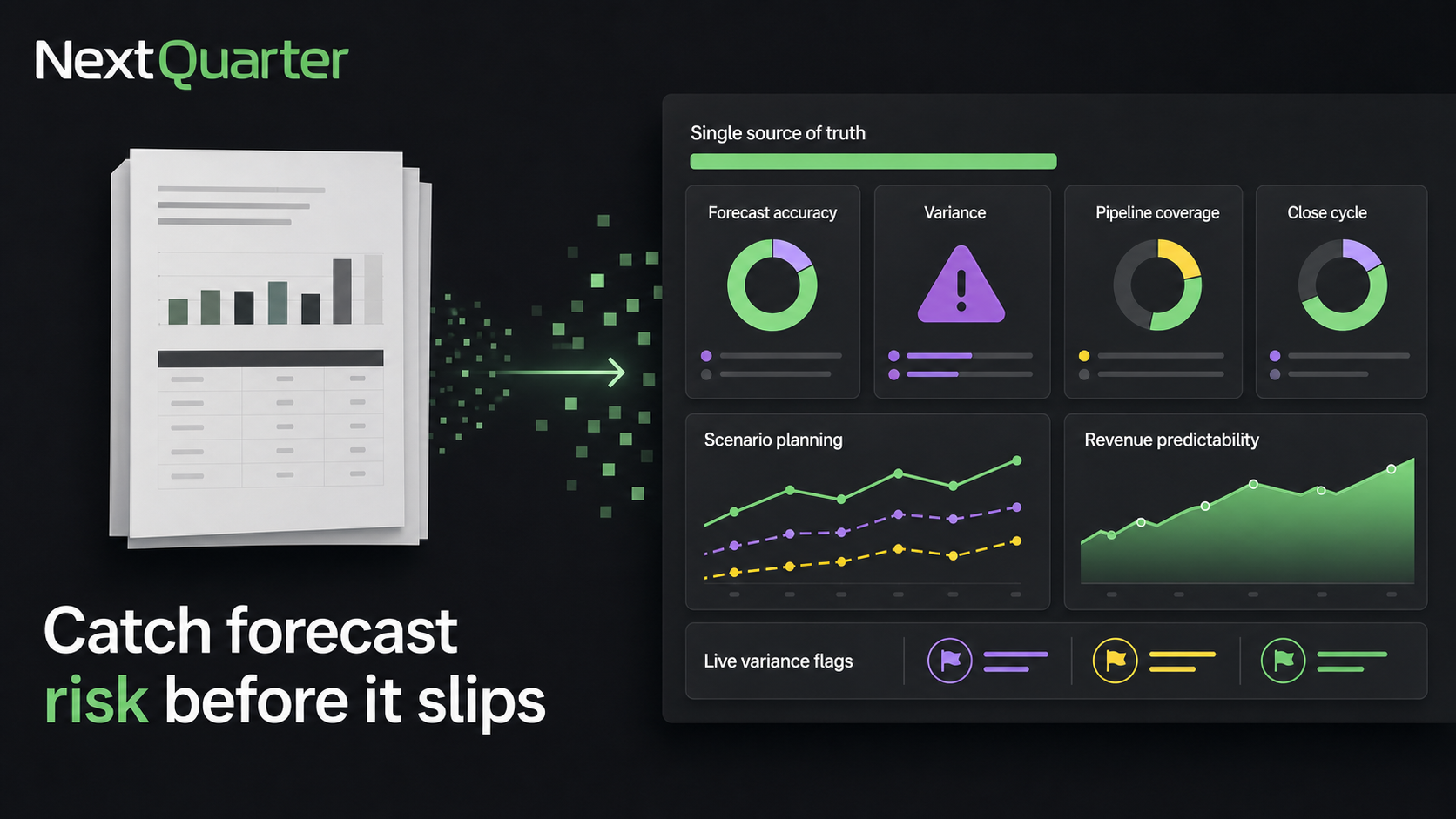
That is why the modern finance function needs more than another dashboard. A dashboard can display what was loaded into it. It does not autonomously roll up the forecast, reconcile the underlying signals, or flag the variance the moment it appears.
How Financial Agents Create a Continuously Current Forecast
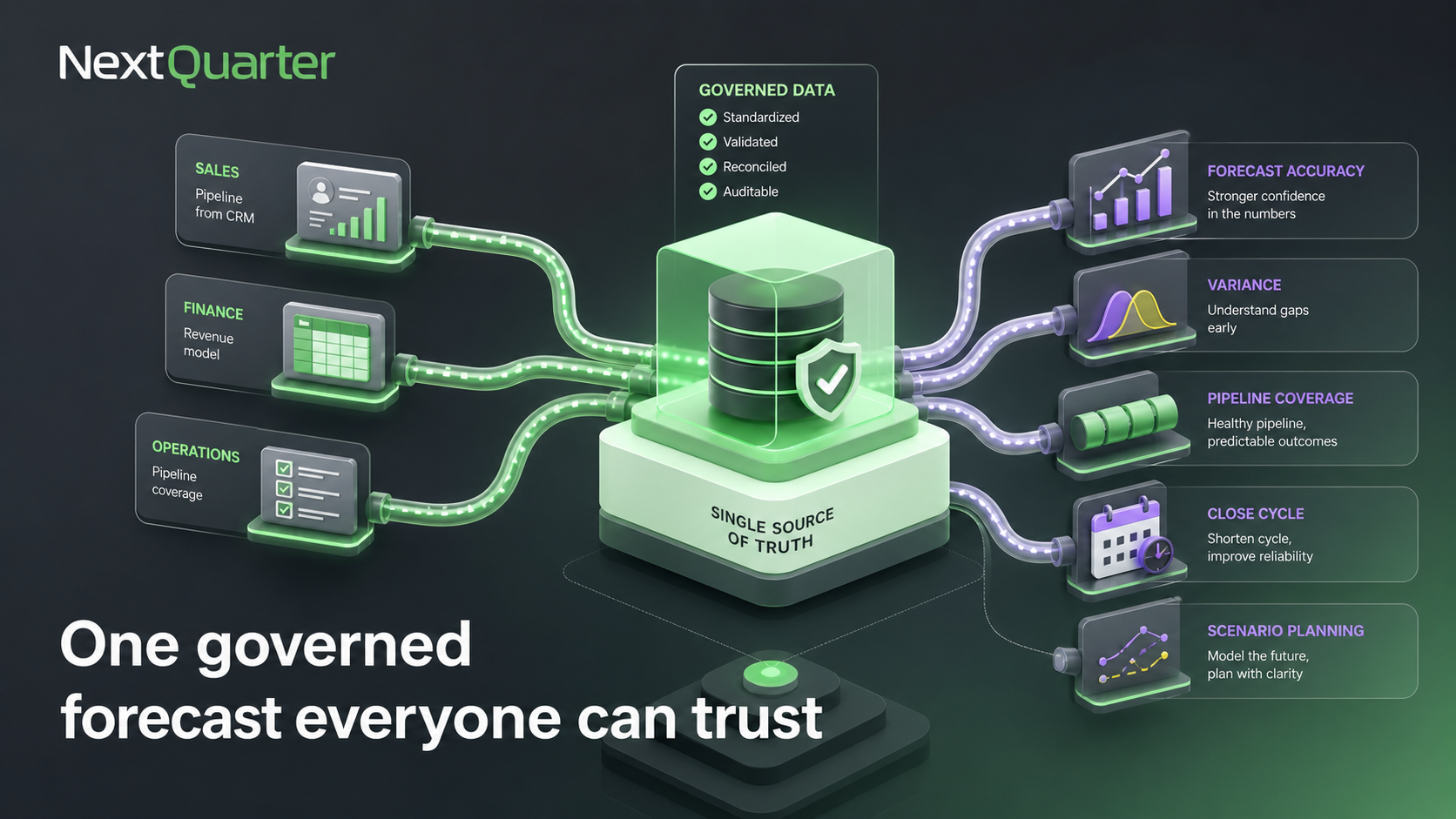
Financial Agents work across CRM, pipeline, and finance data to assemble forecast roll-ups without forcing finance teams to rebuild the model by hand. The mechanism matters: live pipeline data, finance logic, customer KPI definitions, and revenue assumptions are brought together into a governed source of truth that can be reviewed, questioned, and updated continuously.
For the CFO, this changes the weekly rhythm. Instead of waiting for teams to submit spreadsheets, Financial Agents can evaluate the current pipeline, connect it to finance data, and produce a roll-up that reflects the latest business movement. When late-stage deals shift, pipeline coverage changes, or revenue timing moves, the forecast reflects that movement without a manual rebuild.
The result is not a black box. Next Quarter’s finance-native approach is designed for governed output. NQ Fin Assist can provide narrative explanations, charts, risk flags, source queries, and exposed sources, so finance leaders can understand the basis of the forecast and review the logic behind it. That is critical for CFOs who need a board-ready view they can defend.
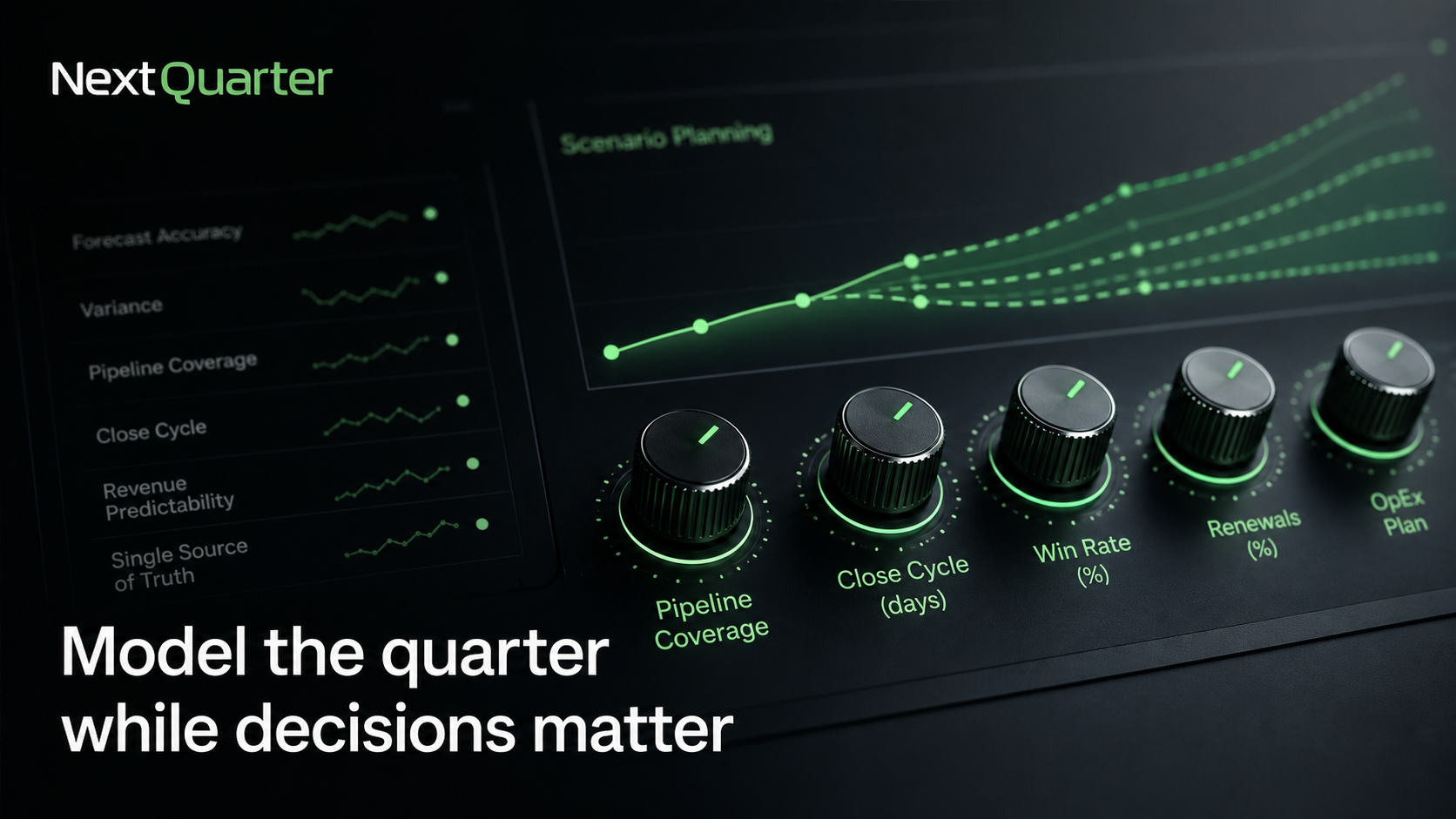
A continuously current forecast also compresses the time between signal and action. If the business is trending below plan, finance does not need to wait until quarter close to discover the gap. If upside is building in one segment, leaders can see the scenario earlier and decide how to allocate resources.
Proof Comes From Forecast Accuracy and Less Reconciliation Toil
Next Quarter collateral documents a Financial Agents customer-observed result of 97% forecast accuracy on average across Next Quarter customers. That figure should not be read as a guarantee for every business. It is evidence that when forecasts are built from live pipeline and finance data, with agentic roll-ups and continuous reconciliation, organizations can move closer to the level of forecast precision investors and boards increasingly expect.
The practical benefit is just as important: finance teams spend less time rebuilding numbers and more time interpreting them. A CFO does not need another system that adds administrative overhead. The value of Financial Agents is that they remove reconciliation toil from the forecasting motion by keeping Sales, Finance, and Operations aligned around one always-current view.
That alignment matters during close, during board preparation, and during the weekly operating cadence. When everyone forecasts against the same data, the conversation shifts from “whose number is right?” to “what should we do next?”
Take the Next Step
See how leading revenue organizations are using Financial Agents to reach more than ninety-seven percent forecast accuracy while cutting the manual roll-up work that consumes finance every quarter close. Discover how agentic forecast roll-ups, continuous variance detection, and on-demand scenario modeling give Sales, Finance, and Operations one source of truth they can all forecast against with confidence. Book a demo of Financial Agents today and see how Gen AI finance intelligence built natively for the modern revenue motion turns the quarter-end scramble into a continuous, board-ready view of where the business is headed and what to do about it now.
Forecasting becomes more valuable when it stops being a Friday fire drill and starts compounding into continuous executive confidence.