A revenue leader can walk past a crowded booth and still ask the only question that matters: what did this spend create? Without cost per qualified meeting, pipeline per event, payback, and budget reallocation signals, event success remains hard to defend. Attendance, energy, and conversations matter, but they are not an ROI model.
Enterprise B2B events require serious investment. Sponsorship, booth production, travel, staffing, executive time, content, and follow-up all draw from budgets that could be allocated elsewhere. Revenue leaders need to know whether that spend created qualified meetings, opportunities, pipeline, and payback.
Event Monetizer by Next Quarter helps teams connect event execution to revenue accountability. It brings strategy, budget planning, outreach, meeting prep, follow-up, and reporting into one connected workflow so leaders can compare events by business impact rather than anecdotal activity.
Event Spend Is Hard to Defend Without a Revenue View
Many event readouts still focus on surface-level indicators: booth traffic, scans collected, sessions attended, meetings held, and general sentiment. Those signals can be useful, but they do not answer the executive question: did the event create efficient pipeline?
A packed booth may include students, partners, customers, low-fit accounts, competitors, and curious attendees. A smaller set of meetings may be far more valuable if the accounts match the ICP and the conversations advance active opportunities. Revenue leaders need a way to separate volume from value.
That requires metrics such as:
- Cost per qualified meeting
- Pipeline per event
- Meeting-to-opportunity rate
- Show-rate for pre-booked meetings
- Time-to-first-touch after engagement
- Opportunity win rate
- Event payback
Without those metrics, budget conversations become subjective. Field marketing may argue that the event created awareness. Sales may say the conversations were good. Finance may ask for attribution. Executives may cut or maintain spend based on incomplete evidence.
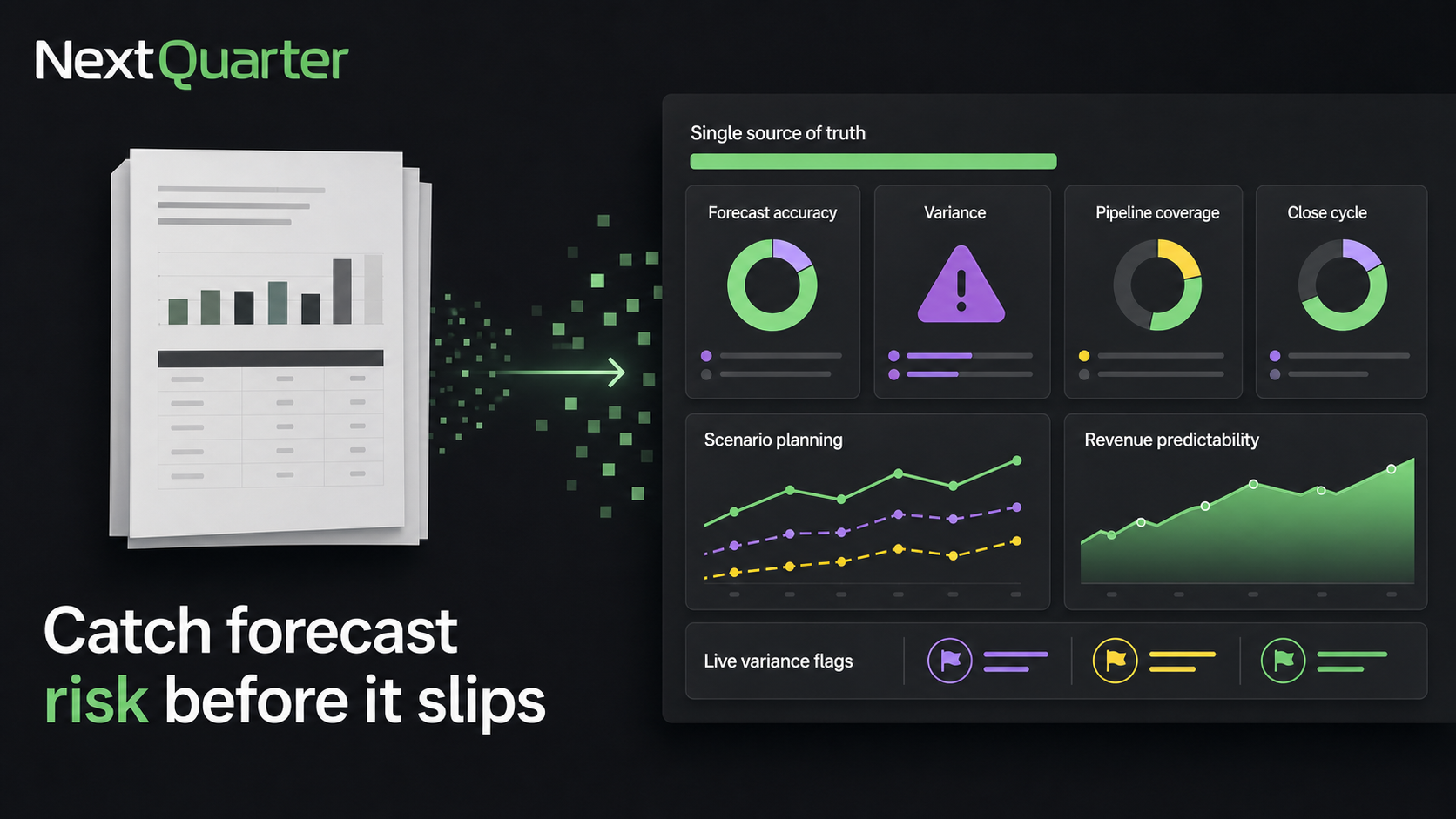
Event Monetizer gives teams a more accountable model. Suite-level reporting captures leading indicators such as targets engaged, pre-books, show-rate, and time-to-first-touch. It also tracks outcome metrics such as pipeline, win rate, and payback. That combination helps leaders see both execution quality and revenue impact.
Measure the Full Event Lifecycle, Not the Final Report
Event ROI is not created in a post-event dashboard. It is created across the full lifecycle.
Before the event, teams need to select the right shows using ICP density, attendee match, account fit, buyer intent, and topic momentum. They need a strategy brief with target audiences, priority accounts, meeting goals, staffing assumptions, budget, success metrics, and expected revenue impact.
During planning, Content & Experience Design helps shape booth messaging, collateral, conversation themes, and interactive elements around priority buyers. The Pre-Event Playbook helps sales engage accounts before the doors open. The Meeting Prep Agent equips reps with account snapshots, stakeholder priorities, discovery-first agendas, expected objections, and next-step options.
After the event, the Post-Event Playbook converts onsite conversation notes into segmented follow-up sequences, discovery questions, objection handling, and follow-up SLAs.
For revenue leaders, the key is that each step creates measurable inputs. Targets engaged, meetings booked, show-rates, onsite conversation quality, follow-up speed, opportunities created, pipeline value, win rate, and payback should all connect. If one part of the workflow breaks, leaders should be able to see it.
This is how Event Monetizer shifts the conversation from event activity to event economics.
Use Cost per Qualified Meeting to Compare Spend
Cost per qualified meeting is one of the clearest ways to evaluate event efficiency. It forces teams to connect spend with meaningful buyer engagement. A large event with expensive sponsorship may be justified if it produces high-quality meetings and downstream opportunity creation. A smaller event may be more efficient if it delivers stronger account fit at a lower total cost.
The documented Event Monetizer customer-observed result is a 20–40% decrease in cost per qualified meeting. That is not a guaranteed outcome for every organization, but it is a strong proof point for the value of making event workflows more targeted and measurable.
Why can CPQM improve? Because better event economics often start before the event:
- Choose events with stronger ICP density and topic momentum
- Prioritize accounts with stronger buyer intent and account fit
- Launch pre-event outreach earlier to book higher-value meetings
- Equip reps with meeting briefs and discovery agendas
- Align booth messaging to priority buyer problems
- Follow up quickly based on onsite conversation notes
- Reallocate budget away from lower-performing events
Each improvement reduces waste. Fewer low-fit meetings. Less manual coordination. Faster campaign launch. Better rep readiness. More relevant follow-up. Clearer attribution.
Event Monetizer also documents customer-observed improvements such as 2.5X meeting-to-SQL-to-opportunity and 20–25% meeting-to-opportunity conversion lift in its collateral. These are not promises. They are evidence that when teams connect strategy, execution, and follow-through, event revenue motions can become more efficient.
Turn Reporting Into Budget Reallocation
The ultimate value of event reporting is not a prettier dashboard. It is better allocation.
Revenue leaders need to decide where the next dollar should go. Which events should grow? Which should be renegotiated? Which should be dropped? Which sponsorship level is justified? Which formats produce better pipeline? Which field teams need better pre-event support or faster follow-up?
Event Monetizer’s standardized dashboards support apples-to-apples comparisons across events. That gives leaders a portfolio view rather than isolated anecdotes. If one event produces strong pre-books but weak show-rate, the issue may be confirmation and rep process. If another generates strong booth traffic but low opportunity conversion, the issue may be audience fit or messaging. If a third creates high pipeline at a lower CPQM, it may deserve more budget.
This is the operating model enterprise event programs need: strategy before spend, disciplined budget planning, buyer-relevant execution, fast follow-up, and transparent attribution.
With that model, revenue leaders can stop asking whether events are “worth it” in the abstract. They can evaluate each event as a measurable investment with leading indicators, outcome metrics, and payback expectations.
Take the Next Step
Move beyond manual event planning and delayed follow up. Use Event Monetizer to plan smarter, engage priority buyers earlier, and convert event conversations into qualified pipeline faster.
When event spend is tied to pipeline, payback, and reallocation decisions, every event can become a measurable, compounding pipeline engine rather than a line item.